
Classic Start 32 Levels Shared Screen
Fireboy and Watergirl: Forest Temple
The best entry point for learning the lava, water, gem, switch, and exit-door rules that define the series.
Fireboy and Watergirl Guide
This page is built as a practical guide, not just a launch directory. Compare the main Fireboy and Watergirl games, learn the shared-screen rules, pick the right version, and then start playing.
The best entry point for learning the lava, water, gem, switch, and exit-door rules that define the series.
Fireboy handles lava, Watergirl handles water, and both must avoid green goo. Most puzzles come from splitting duties, not from raw speed.
Forest Temple is the cleanest start, Light Temple is more observational, Ice Temple is more technical, and later temples ask for stronger route planning.
Use the guide sections to avoid common mistakes, then follow the play links when you know which game fits your current skill level.
Version Guide
The six main games share the same co-op foundation, but each temple changes the kind of thinking required. Use this comparison before jumping into a random version.
The clearest starting point for learning why Fireboy and Watergirl need different routes.

Less stressful mechanically, but it asks you to read the room before moving.

The main challenge is movement precision, especially stopping and jumping on slippery floors.

More thoughtful than fast. It rewards players who pause and map the level before committing.

A broad series sampler where experience from earlier temples makes a real difference.

Friendlier visually, but later levels still depend on careful timing and clear role splitting.
How To Play
Many failed runs happen because players rush before assigning roles. In most levels, decide who scouts, who holds a switch, and who reaches the exit last.
Send Fireboy through lava, send Watergirl through water, and keep both characters away from green goo. Plan the exit route before chasing every gem.
Buttons, levers, and platforms usually determine the order of the level. Let one character hold the safe position while the other moves through.
Most stages require both characters to arrive at their matching doors. Do not leave a key switch too early near the end.
Guides

Co-op · 2 分钟
A short guide to choosing co-op games that work well on one keyboard or one shared screen.

Guide · 2 分钟
A practical guide to hazards, controls, route planning, and the cooperation patterns used across the series.

Recommendations · 3 分钟
A curated list for players who enjoy quick browser games with a friend, sibling, or partner.

Walkthrough · 2 分钟
Learn how the first temple introduces buttons, doors, gems, and split routes before the later games get harder.
More Co-op Games
If you enjoy red-and-blue character routing, switches, doors, and shared-screen cooperation, these related games are useful next picks rather than random filler links.

A red-and-blue character platform puzzle with familiar co-op routing and hazard separation.
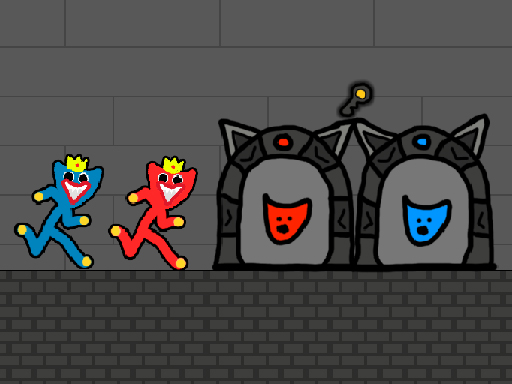
A two-character stickman adventure focused on keys, doors, timing, and shared progress.
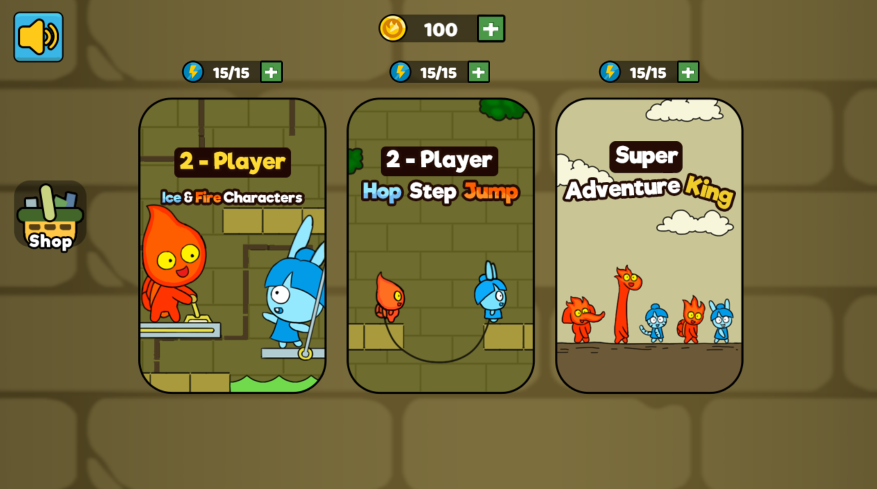
A related puzzle platformer for players who want more switch-and-door challenges.
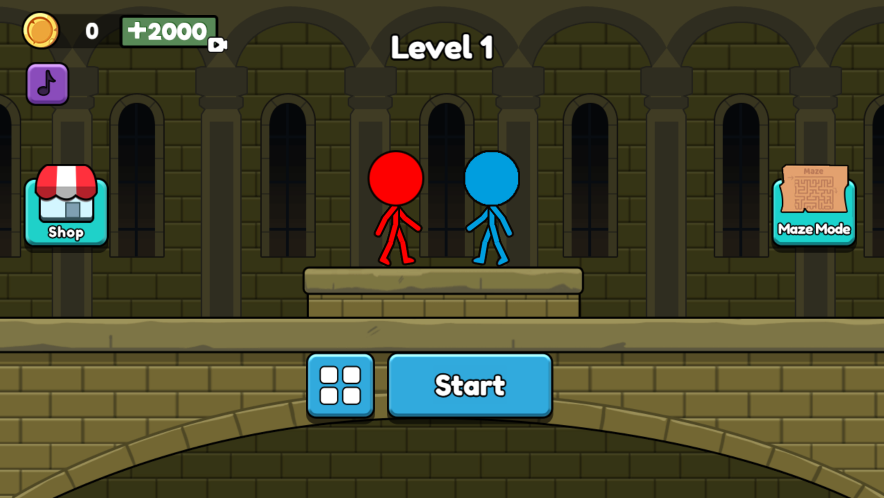
A forest-themed co-op style game with gems, doors, boxes, and route coordination.
Start with Forest Temple. It teaches the core rules clearly: Fireboy can cross lava, Watergirl can cross water, and both characters must avoid green goo.
Yes. The series is designed for two players on one screen, but one player can control both characters by switching attention between the two control sets.
Players need more than a launch button. Version differences, control notes, hazard rules, and route advice help them choose the right game and stay longer.
Many versions can be played in a mobile browser, but landscape mode and fullscreen are recommended. Keyboard play is usually better for precise jumps.